Showing posts with label academics. Show all posts

Tuesday, 1 May 2012

TODAY'S THE DAY (!)


Okay, yesterday was the day.

Friends, I have finally submitted my thesis. Waaah!! 

I didn't want to say anything yesterday in case something went terribly wrong, but it's official. It's submitted and I am...done?

Yep, now the dreaded question: what next? I began this blog just over a year ago to help stay sane throughout the last year of my Masters, and while I have all intention of continuing to write, I'll obviously be making some changes over the next few months. For one, I'll no longer be trying to cut loose from academia. Wha? 

Instead, I'll be working toward other stuff. I have some ideas, but I'll probably keep them a secret until they actually happen. While most people like to tell others what they're up to so that this way they'll be held accountable and have to follow through, I'd rather just be hush hush about whatever it is. You don't need to know what I'm up to until it happens, anyway. Right? Right.

Stay tuned, as I embark on my next journey (which I'm going to figure out...soon).

DEEP BREATH.

Follow my blog with Bloglovin

image via
pinterest 

Monday, 23 April 2012

COUNTING DOWN

My thesis is due in one week, which means that this week is going to be a very busy one. The one thing keeping me sane other than my dearest family and friends? Dinner breaks--trying to think up delicious dinners that are quick and easy to make.

Here are some of the things I've cooked up in the past couple of weeks (recipes to come!):

Chicken Fried Rice with Egg, Veggies, & Coconut Milk

Spicy Chicken Stir Fry with Peppers & Soba Noodles

Braised Chicken Thighs with Tomatoes, Red Onion, Garlic, & Olives

Steamed Mussels with White Wine, Garlic, & Tomatoes


For all those cramming for exams and working on end-of-term projects (or anyone else who has just had a long, hard day), what are your favourite ways to de-stress?

Thursday, 5 April 2012

LITERACY AND CONFUSION, BRIEFLY


I'm still surprised with the number of people who are uninformed about health and nutrition. Especially with the rise of obesity and chronic illness facing North Americans today, you would think that more individuals would have a greater concern for their health. From what I've observed, there is still a vast amount of ignorance about the topic of health and nutrition. And even when people think they are informed, they're often just confused.

Whether it's because I'm writing my thesis on nutritional literacy and the idea that the lack of nutritional literacy prevalent in society today is a threat to consumer health, or because I'm recognized by many of my friends and family as leading (or at least trying to lead) a healthy lifestyle--particularly with regards to diet and fitness--I get a ton of questions about what's 'healthy', what's not, what people should be consuming, what kind of exercises they should be doing, why they aren't losing/gaining weight, etc.

Well, I'm no nutritionist. I'm also not a personal trainer. But I do read a lot about either topic and through my own experiences with trainers, nutritionists, and medical professionals, I have obtained a great deal of information (not to mention, it is part of my thesis). Whether or not this information is adequate, though, is up to me (the consumer) to decide. Ahem, and you.

'Nutritional confusion' is a term first developed by sociologist Gyorgy Scrinis and later popularized by scientific writer Michael Pollan. The term describes the state in which consumers find themselves when faced with constant, often contradicting nutritional information. This confusion is dangerous insofar that it perpetuates an ignorance about nutrition. Even for someone who tries to stay informed about health and nutrition, I'm often faced with an uncertainty about a particular food or health product (often because of contradicting information) and have to either do further research to uncover more information about this so-called product and/or make a personal judgement call about whether or not I think this product is worthwhile.

When friends and family ask me about particular foods, diet plans, fitness routines...I always offer my informed opinion, but I also encourage them to research whatever it is on their own or or to seek the help of other individuals well versed in the topic or even professionals who might be able to offer some guidance. Health and nutrition is personal. The ways in which one person conducts his or her life in terms of diet and fitness is not necessarily going to be the same for another person. This is why I think self-education is so important. Individual health and nutrition should start here. Whether through literature or with the help of others, every person must find what works for him or her. You can try different diets (vegetarian, vegan, raw, low-carb, gluten-free, paleo), try different eating routines (several experts recommend six small meals a day to keep your metabolism boosted and your blood sugar levels at bay, but some people do just fine with four meals a day?)...whatever it is, every body is different. Find out what works for you. 

Stay tuned for more on this topic, including my take on health and nutrition. 

Friday, 2 March 2012

HEALTHY ALTERNATIVES

My more recent research has been to look at the glycemic indexes of certain foods (not sure what I'm talking about? Go here or here before reading further). Simply put, the glycemic index is a means by which to measure the effect of carbohydrates on blood glucose levels. Choosing low-GI carbohydrates--ones that produce only small fluctuations in our blood glucose and therefore insulin levels--is noted by the Glycemic Index Foundation as being the secret to long-term health and reducing the risk of chronic illness such as heart disease and diabetes. Low-GI foods are not only digested more slowly than high-GI foods, therefore minimizing spikes in blood glucose levels and subsequent risk for long-term physiological conditions, but they are richer in micronurients.

One of the books I checked out from the library that turned out to be a great source is The New Glucose Revolution: Low GI Eating Made Easy by Dr. Jennie Brand-Miller et al. The book discusses the benefits of a low GI diet and how to go about transitioning to one (if you're not already eating this way). What I really like, though, is a section in the second half of the text that lists the top 100 low-GI foods, what makes them low-GI, and how you might prepare/serve them. While this list was useful for my research, it was also interesting to look at for my own personal use. Even better, the book offers a list for low-GI alternatives to high-GI foods. So if you are looking for some healthier high-GI alternatives in your diet, here it is:

(plus my recommendations)


Many of the high-GI foods listed can be considered 'junk foods'. I really wanted to bring light to this, though, because so many people think that they are leading healthy lifestyles when actually, they aren't. Or they very well know that they aren't the healthiest person (whatever that may be), but they don't know just how much they're consuming that's bad for them--unless you write down everything you eat, but how many people actually do this?

As I mentioned, if you aren't comfortable with the glycemic index, this is a great source. But so is Brand-Miller's book, available here, alongside her other books.

"A low-GI diet is a way of eating long term." Take a gander, and let me know what you think.

Happy, healthy.

info via The New Glucose Revolution: Low GI Eating Made Easy

Tuesday, 21 February 2012

SUPER DUPER

Hey pals, don't be shocked if I suddenly disappear from the blogosphere for a while/short while/moment--I'll be back, life just gets busy sometimes.

Like now. I'm busy all day with auditions and then more audition prep for later this week. I have a conference to attend tomorrow (for acting stuff) and then plans later this week to hit the slopes with my gal pal, T. Yeah, worst graduate student ever, going snowboarding and all. But not really, because in between all of this, I'm also working on writing my thesis (good golly, it's going to suck to have to edit that thing) and trying to stay on top of everything else that is life (family, boyfriend, health, oh...and coffee dates, those are important).

(And hey, I'm not complaining. Busy is good. Really good. It's just also my reason for any lack of posts.)

Right. And now, it's time to go work on that audition prep I was talking about. And that 'in-between-all-of-this-thesis-writing' stuff, including watching this documentary and re-watching this lecture (which, if you're interested in what's making people fat and contributing to chronic illness, you should watch).


                                                 If you haven't seen Food, Inc., you need to watch it!

Happy juggling!

video via youtube

Thursday, 2 February 2012

POTATOES, NOT PROZAC


While away on vacation, I caught up on some reading for my thesis research. One of the several pieces of literature I'm reviewing for my work is Katherine DesMaisons's Potatoes, Not Prozac (1999). In her text, DesMaisons addresses the issue of sugar addicition. She claims that in the same way users can become addicted to drugs or alcohol, they, too, can become addicted to sugar. DesMaisons argues that 'sugar sensitivity' is based on the individual's biochemistry and offers ways in which the 'user' can combat their addiction to the substance found (almost) everywhere--in all the foods we, Westerners, consume--sugar.

What I like about DesMaisons book and her approach to discussing the topic is that she's honest about her own trials and tribulations (I think she has to as an academic). What's important is that she doesn't sugarcoat (pun intended) anything, and I really appreciate that. In the first few pages of her text, DesMaisons asks the reader several questions about their lifestyle, their diet, their energy level, their stress level, etc. etc. all with the intention of resolving any problems that may be keeping the reader from achieving a happy, healthy, energetic lifestyle.

Now, I consider myself a relatively healthy person. In fact, a number of my closest friends and family members will tell you that I'm one of the healthiest people they know. Due to health concerns (I was diagnosed with lupus ten years ago), I have had to make some changes over the years. The biggest change I had to make was to my diet, by cutting refined flours and sugars--basically anything processed. The more natural the food (the closer it is to its raw, natural state, the better). Today, this is just a regular bit of dietary advice floating around the world of nutrition. Despite that, however, I would argue that the majority of individuals continue to consume a dangerously high amount of processed and refined foods (most of the time without even knowing it). That said, I don't want to talk about eating refined foods versus eating foods that are not refined--I could spend several weeks discussing the topic. Yeah okay, consider this an aside.

But, back to DesMaisons. As someone who prides herself on eating healthy (with more studies pointing to wheat/gluten as one of the key culprits in inflammation, I've slowly been transitioning to a gluten-free diet, and am now looking into the paleo diet, which is recommended for individuals who suffer from auto-immune disorders such as lupus or any other inflammatory diseases), getting enough rest, leading a balanced lifestyle of work and pleasure (or at least trying to), even I could agree with many of DesMaisons negative points of address. These points include: tired for no reason, irritable, overwhelmed, stressed out, and lack of energy. If I'm so 'healthy', why do I get tired for no reason? Before getting irritable (at which time I know I've waited too long to eat and my blood sugar is too low), how can I maintain a healthy blood sugar level?

It's all about balance. And DesMaisons explains it all in her book. She says that you're sugar sensitive if you have an unstable blood sugar, low serotonin, and low beta-endorphin. The answer to recovering from sugar sensitivity is to achieve a balance with all three. And even though I do certain things and eat a certain way to achieve what I think is 'healthy', I'm still feeling tired at times. I do get irritable or overwhelmed. And I do have a lack of energy more often than I'd like to. And if you're in the same boat, maybe you should give DesMaisons's book a read. She offers a 7-Step Recovery Plan (bits and pieces of which I've taken and made my own) to help achieve the necessary balance and a healthy, happier, more energetic you.

And I'll tell you now, if you've ever craved sugar--not just the sweet stuff, but bread, pasta, and rice, too--according to DesMaisons, you're probably sugar sensitive. And that sugar you're craving is probably bogging you down on a day-to-day basis. DesMaisons can help.

Find this book and DesMaisons's other texts, The Sugar Addict's Total Recovery Program and Your Last Diet on Amazon.

image via google

Wednesday, 11 January 2012

BAD SUGAR


After yesterday's post on how sugar is making people fat, I thought this advertisement was fitting.

Maybe you'll think twice the next time you reach for a cold soda.

video via youtube

Tuesday, 10 January 2012

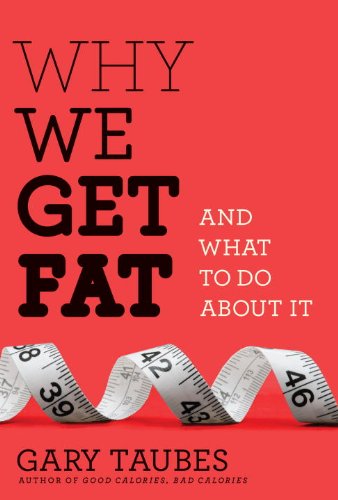
WHY WE GET FAT

I've mentioned before that I'm writing my thesis on nutritional literacy and consumer perception of health and nutrition products, with an angle on sugar consumption, specifically. Now that I am finally able to focus solely on this topic, I can share with you some of my findings. For my research, I have read a number of articles and books (and still have many more to read) in which I have uncovered information that I believe the average consumer is not aware of. An example is this weekend, when at a shoot, the photographer seemed to know a lot about nutrition (so much so, even I was being challenged! and I thought I knew a lot), while the make-up artist appeared to know very little. With everyone brushing off their running shoes, heading to the gym, and trying to get back in shape for the new year, I thought it was fitting that I give my two cents. Here are my thoughts on sugar and getting fat.

Why We Get Fat: And What to Do About It is a book by scientific writer Gary Taubes, in which he argues that certain kinds of carbohydrates--not fats--have led to our current obesity epidemic. The book is an extension from his earlier book, Good Calories, Bad Calories, and which makes such an argument easily accessible to a wider, nonscientific audience. Taubes reveals what he refers to as bad nutritional science of the last century and the good science that has been ignored, particularly insulin's regulation of our fat tissue. I highly recommend giving this book a read.


Another book I have been reading (and which offers a straight forward explanation of the topic I'm about to discuss) is Living the Low-Carb Life by Jonny Bowden, who also--and very necessarily--looks at insulin and its function when it comes to the metabolic breakdown and distribution of fats within the body. Basically, when an excess of sugar is consumed, there is an increase in triglycerides and cholesterol. Here's how it works:


When a meal heavy in sugars is consumed (high in carbohydrates), part of the excess sugar will be converted to the storage form of glucose, glycogen, much of which will be stored in the liver. Because the liver doesn't hold a lot of glycogen, if there is still excess sugar--which there almost always is after a high-carbohydrate meal--it is packaged into triglycerides (fats). The high level of insulin accompanying the high-carbohydrate meal stimulates the production of cholesterol, which then packages together triglycerides into little containers called VLDLs (very low-density lipoproteins), most of which become LDLs (low-density lipoproteins) or "bad" cholesterol. Thus, high levels of insulin ramp up the production of cholesterol in the liver and high levels of sugar consumption ramp up the production of triglycerides, neither of which are good. 

What can happen is something called insulin resistance, which essentially is when insulin is no longer effective at lowering blood sugars. Insulin resistance can make losing weight extremely difficult and can increase the risk of heart disease and diabetes. Particularly for those who live a sedentary life, muscle cells will eventually resist the acceptance of sugars. In this way, they also become resistant to insulin. Instead, fat cells welcome insulin, fill up, and lead to weight gain. In the bloodstream, the VLDLs are carrying triglycerides, trying to rid of them. After the VLDLs have been dropped off at their corresponding tissues, most of them turn into LDLs or "bad" cholesterol. This, in turn, leads to being overweight, high triglyceride levels, high LDL cholesterol, and high levels of insulin forcing the pancreas to work extra hard. And this is how increased levels of insulin (due to increased levels of sugar) can lead to heart disease and diabetes.

If the pancreas becomes weak and can't keep up with the amount of sugar entering the body, the sugar will run out of places to go and will stay in the blood. Blood sugar levels will rise, leading to elevated insulin (and elevated blood sugar), high triglyceride levels, and abdominal obesity. The other thing that can happen when the levels of insulin in the blood become dangerously high is the increased production of cortisol and adrenaline. Cortisol and adrenaline are added to the blood to counteract the "building up" effects of insulin and to attempt to bring the body back in to balance. However, cortisol breaks down the muscle, which further reduces the metabolic rate, while too much adrenaline can eventually lead to even more insulin, as insulin will eventually be secreted to combat the effects of too much adrenaline.

So, what to do? Well, in Bowden's text, he suggests a number of different dietary programs, all of which emphasize the consumption of proteins and fats in place of carbohydrates, and if carbohydrates are consumed, they should be those with a low glycemic index (something I'll discuss at a later date). But you're also probably wondering about what you can take away from this post, as I do throw a lot out there all at once, without really saying "Well, this is what you should do...". Really, it's not my job to tell you what's good and what's not, but this topic really interests me and I do think it's worth considering.

I still eat carbohydrates. They're everywhere. Almost unavoidable. Fruit is a carbohydrate. The carbohydrates that Bowden and anyone else who has researched the topic (many, many people) are concerned about tend to be refined, processed, those which enter the bloodstream quickly and send our blood sugar levels skyrocketing. It is these carbohydrates that are making us fat. But what about plain ol' fats, you ask? Well, that's another topic for another day, but simply put, stop consuming trans-fats. Consume more omega-3s and fewer omega-6s. And as for carbohydrates, toss that granola bar in the trash. It's probably only making your 4 o'clock slump worse.

But also, keep in mind, going low-carb is not the answer for everyone. It really depends on your nutritional goals, your day-to-day activities, and of course, your genetics. I guess, then, what I want most for you to take away from this is a warning. This is a warning about the potential health risks you could be exposing yourself to by consuming too many sugars. And the truth is, far too many people are unaware of these risks. Educate yourself!

Here's to a healthier, happier you!

images via  google

Thursday, 29 September 2011

CHEW ON THIS


Could this be the next best thing in energy bars? It could just be like any other health food to hit the market: if it's having to make a claim that it's a health food, perhaps the product itself falls short of actually being considered 'healthy'. Then again, what is 'healthy'? And that this food, as Michael Pollan of The Omnivore's Dilemma and In Defense of Food has noted, is packaged in the first place, makes one ponder the good food-bad food debate all over again. Shouldn't we be eating fresh (un-packaged) foods like vegetables and fruits? And finally, is this article just a plug for someone's new product? Hello, food politics.

I'll leave that up to you to decide.

I came across this article this morning (actually, it was in my e-mail inbox, I highly recommend you subscribe to this website) and was immediately intrigued. For my thesis research, I am doing a critical analysis of nutritional literacy--or the lack thereof--and people's perceptions of nutrition, nutrition labelling, etc. As part of my research, I will be conducting a case study of three brands of granola bars, all similar in caloric content, two claiming to be 'organic' and/or 'health' products, two high-glycemic, and one low-glycemic. After reading this article, though, perhaps I need to add a fourth brand?

While I still have a lot of research to do, I hope to update you with my findings along the way. My academics seem to be my greatest focus these days, so the least I could do was share a bit of it with you.

As for whether or not I'm convinced by this product? I think I'd consider it (but I'll let you know in the spring when I complete my thesis). 

Read Dr. Mercola's article and let me know what you think.

image via dr.  mercola

Friday, 22 April 2011

WEEKEND SALUTE

Despite it being Easter weekend, I'll be dedicating the majority of my time to research (or so that's the plan). While I just submitted a research paper today, I have yet another to research and write before I can officially celebrate the end of term. The topic? Domesticity and gender representation in Mr. Clean ads from the '60s versus today. The timeline? One week. Ugh.


Mr. Clean--retro styles.

On the bright side, I'll be spending part of the weekend with R's family, which is always a lot of fun! Every year for Easter, we have a great big dinner by R's dad (who is an amazing cook), I often bring some sort of dessert (ahem, cupcakes), and there's usually some inappropriate family talk at the table. Oh, but that's the best part!

Happy Easter from Tomfoolery and Bright! xx
What do you have planned for the holiday weekend?

images and video via youtube, google, and tip junkie